
Crawl Space Repair & Encapsulation in Sterling Heights, MI
A huge 1960s–70s build-out on clay, with foundations now well past the life of their original waterproofing.
Free Crawl Space Inspection
A real look at the problem and a written number. No obligation.
Insured · Lifetime Transferable Warranty · We'll call you back to schedule your inspection.
- Insured
- Lifetime Transferable Warranty
- Free inspection, written number
Sterling Heights is full of quad-levels and split-levels from the 1960s and 70s, and a great many of them have a crawl space under the family-room wing while the rest of the house sits on a full basement. Those crawls were built vented, with a dirt floor, over clay that stays damp for weeks after rain. The result is a space that pulls moisture up into the framing and pushes it into the living area above through the stack effect — the musty smell in the family room, the cold floor, the humidity the furnace cannot seem to beat.
Crawl space work in these homes starts with the water, not the plastic. If the crawl floods or stays wet, a vapor barrier laid over it just hides a drainage problem; the fix is a drain and sump, or grading, first. Where joists have softened or insulation has fallen, that repair comes before anything is sealed. Then the space is encapsulated — sealed liner, closed vents, and dehumidification sized for the volume — so the clay below stops setting the humidity of the house above.
Why it matters in Sterling Heights
Because the crawl in a Sterling Heights quad-level usually sits next to a finished basement, moisture in one migrates to the other. Treating the crawl fixes a problem homeowners often blame on the basement, which is why we look at both on the inspection.
Crawl Space we have done
Photographs from our own jobs across MI. Job photos, not before-and-afters.
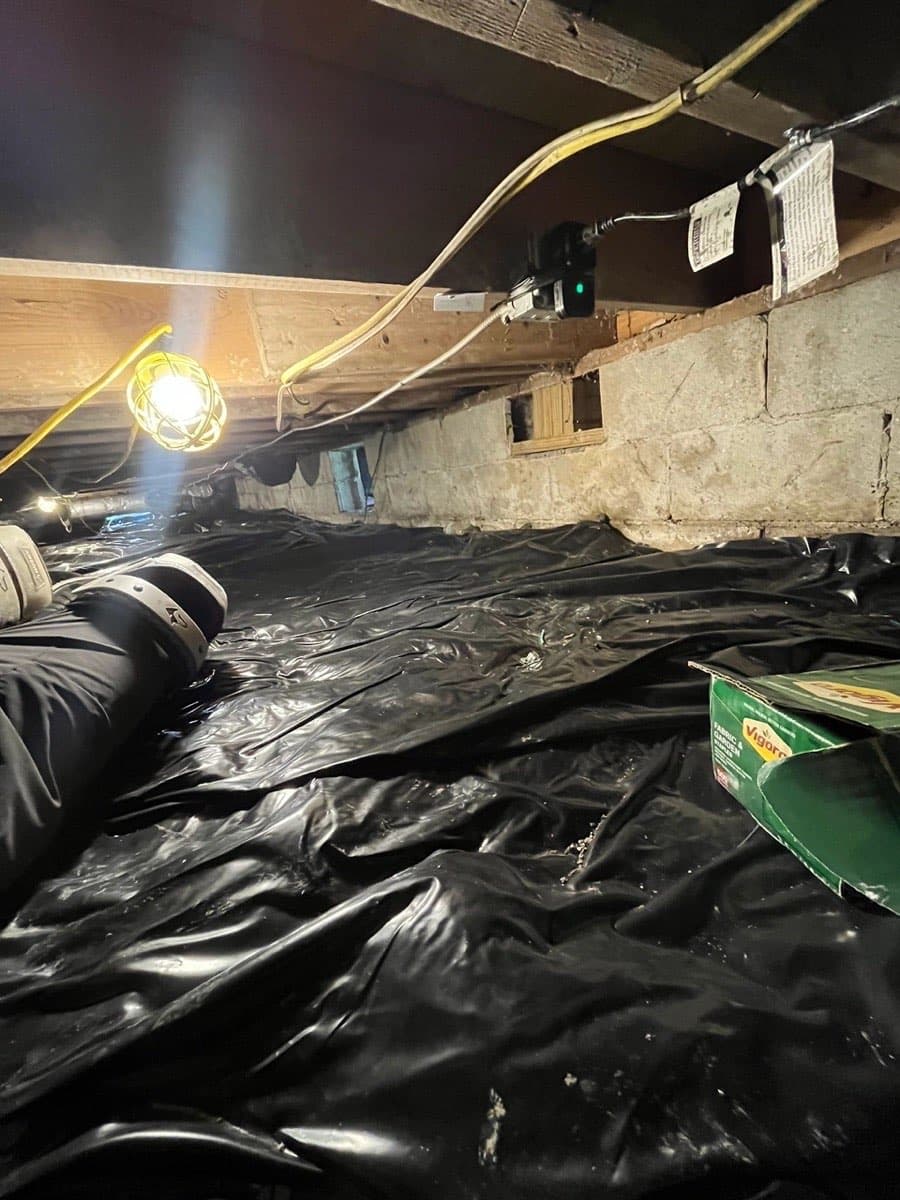
Full Crawl Space Encapsulation
Complete crawl space encapsulation with heavy-duty vapor barrier, dehumidifier, and insulation.
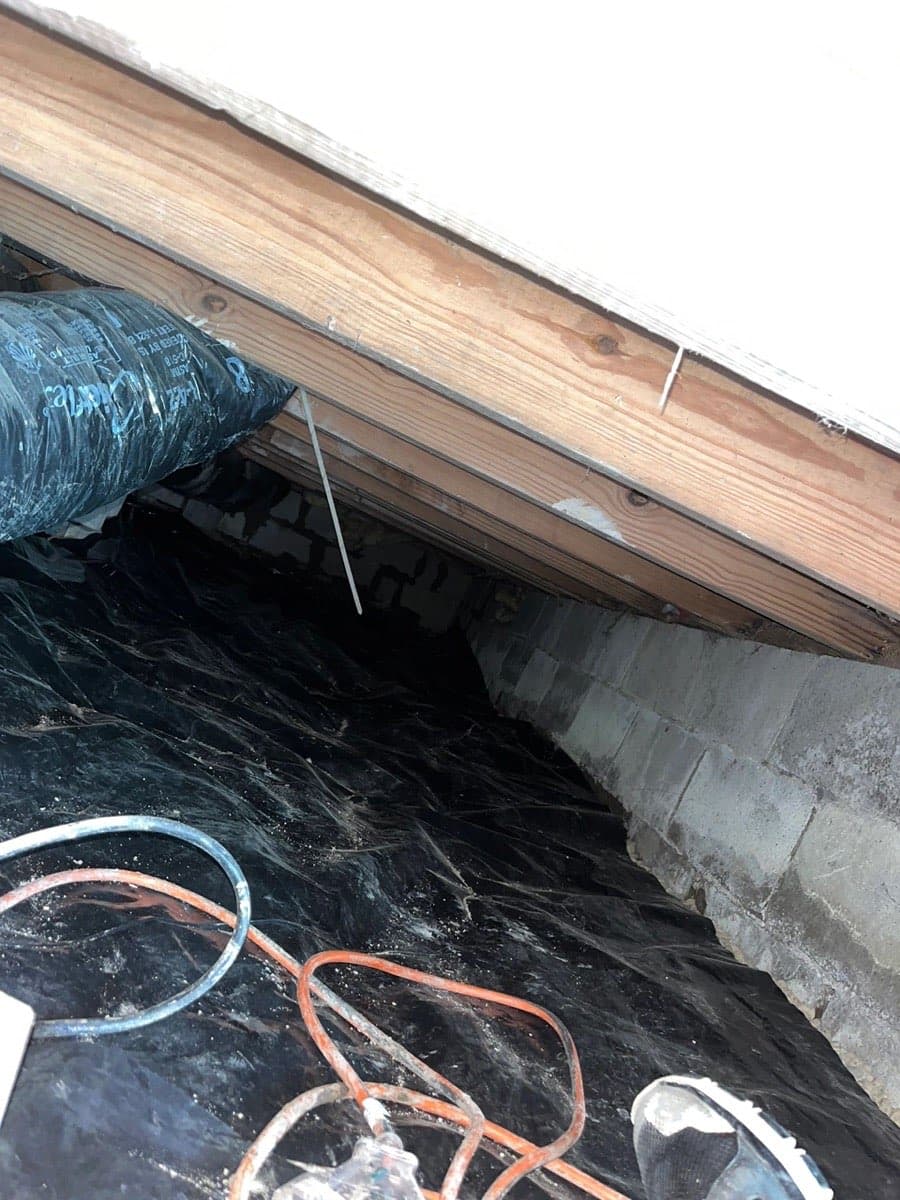
Crawl Space Vapor Barrier Install
20-mil vapor barrier installation with sealed seams and wall attachment.
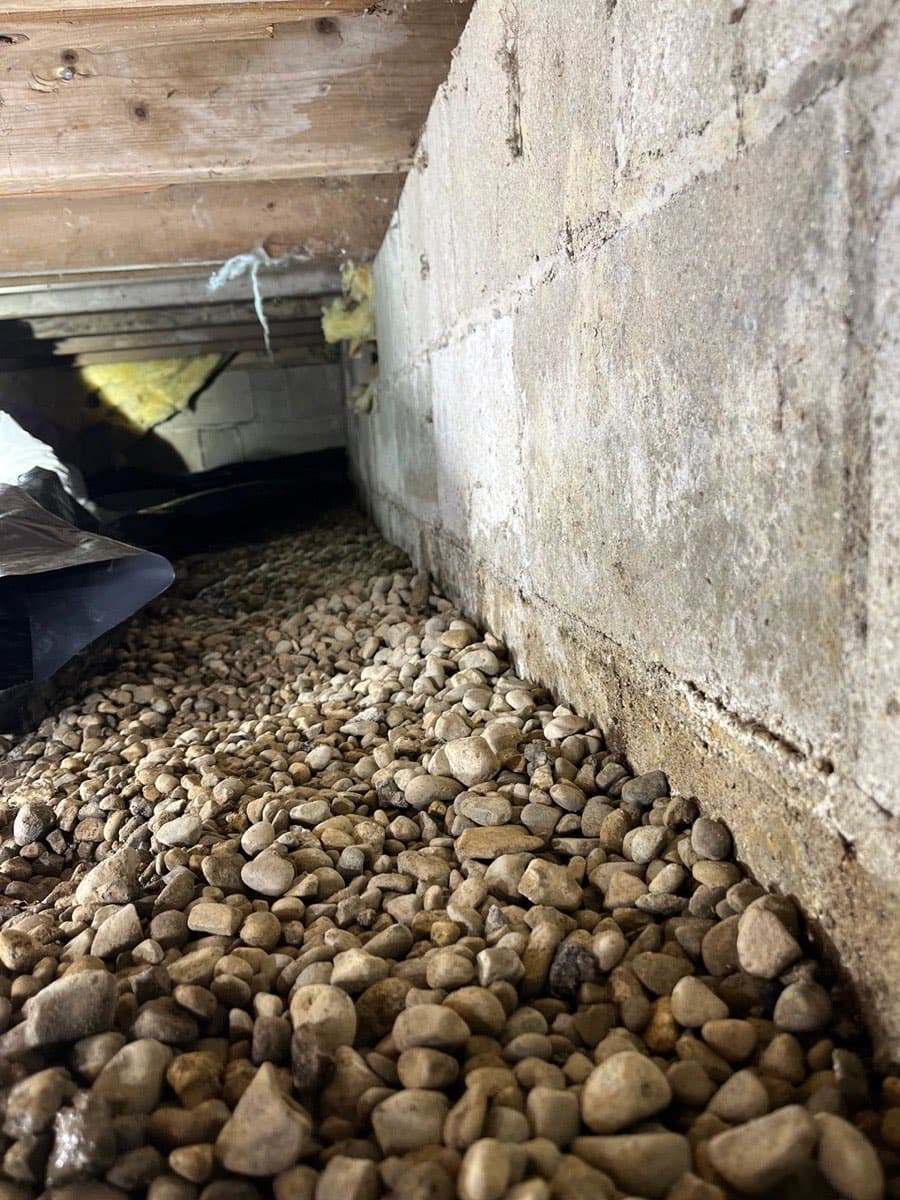
Crawl Space Drainage & Encapsulation
Drainage system combined with full crawl space encapsulation for a permanently dry space.
Crawl Space in Sterling Heights: questions we get
Is crawl space repair the same as crawlspace waterproofing?
People search it a dozen ways and mean the same job: getting water and water vapour out from under the house and keeping it out. Repair is the part that fixes existing damage — soft joists, failed insulation, standing water. Waterproofing or encapsulation is the part that keeps it dry afterwards. In a Sterling Heights quad-level the two are usually one visit.
Should the crawl space vents stay open?
In this climate, on clay, no. Open vents were meant to dry the space out and in practice they let humid summer air in and cold air under the floor in winter. Once the moisture source is handled, we close the vents and control the humidity mechanically, which is what actually keeps the framing dry.
How does the free inspection work?
We come out, look at the actual problem, and trace where the water or movement is coming from rather than quoting from the driveway. You get a written scope and a real number before any work starts — no pressure, and no obligation to book on the spot.
More about Sterling Heights
Looking for the service overview? See Crawlspace Encapsulation & Crawl Space Repair.
Protect Your Home Today
A free inspection, a written number, and a crew that answers the phone. No obligation.