
Foundation Repair in Sterling Heights, MI
A huge 1960s–70s build-out on clay, with foundations now well past the life of their original waterproofing.
Free Foundation Repair Inspection
A real look at the problem and a written number. No obligation.
Insured · Lifetime Transferable Warranty · We'll call you back to schedule your inspection.
- Insured
- Lifetime Transferable Warranty
- Free inspection, written number
The foundation problem we see most in Sterling Heights is a block wall from the 1960s or early 70s with a horizontal crack partway up. That crack is different from the vertical settlement cracks common in newer subdivisions: it means fifty-plus years of clay expanding and contracting has started pushing the wall inward. Stair-step cracking along the mortar joints is the earlier warning; a wall that has begun to bow is the later one. Both are repairable, with carbon fiber reinforcement where movement is minor and wall anchors where it is not.
The later-70s houses with poured walls fail differently. There the usual entry points are tie-rod holes and the occasional vertical crack from settlement, which are sealed by injection rather than reinforced. Either way the order of work matters: a wall that is still moving cannot be waterproofed, because a sealed surface on a shifting wall does not hold. We stabilise first, then handle the water that caused it — which is why foundation repair and foundation waterproofing usually arrive together on a Sterling Heights estimate.
Why it matters in Sterling Heights
Sterling Heights is one of the largest cities in Michigan and a steady part of our week, so we have been inside enough of these block walls to know the difference between a crack that needs a monitor and one that needs anchors this season. You get that call in writing, with the reasoning.
Foundation Repair we have done
Photographs from our own jobs across MI. Job photos, not before-and-afters.
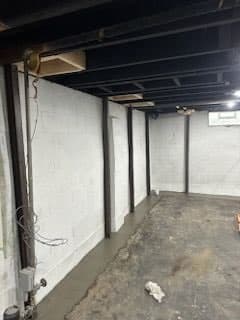
Foundation Wall Stabilization
Carbon fiber and steel reinforcement to stabilize bowing foundation walls.
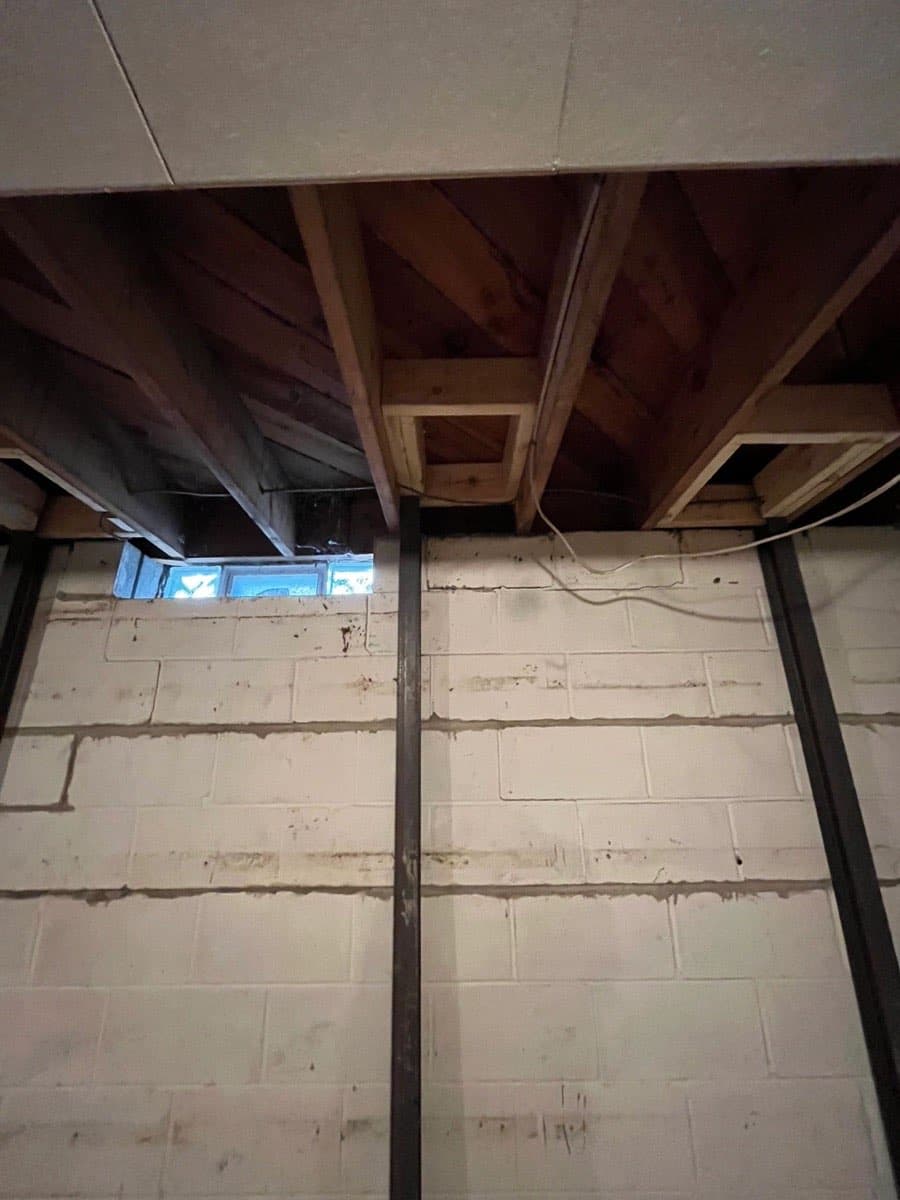
Foundation Assessment & Repair
Foundation assessment with a written repair plan, then the repair.
Foundation Repair in Sterling Heights: questions we get
Is a horizontal crack in my block wall an emergency?
It is more serious than a vertical one and should be assessed promptly, but it is usually not a same-day emergency. A horizontal crack partway up a block wall means soil pressure is pushing the wall inward. Caught early it is repaired with carbon fiber straps; once the wall has bowed measurably it needs anchors. Waiting a season tends to move a job from the first category into the second.
Can you waterproof the wall at the same time as repairing it?
Yes, and in Sterling Heights we usually recommend it, because the same clay pressure that cracked the wall is what pushes water through it. The repair is sequenced first so the wall is stable, then the drain tile and sump handle the water. Doing the waterproofing alone on a moving wall is the failure we get called to fix later.
How does the free inspection work?
We come out, look at the actual problem, and trace where the water or movement is coming from rather than quoting from the driveway. You get a written scope and a real number before any work starts — no pressure, and no obligation to book on the spot.
More about Sterling Heights
Looking for the service overview? See Foundation Repair & Foundation Waterproofing.
Protect Your Home Today
A free inspection, a written number, and a crew that answers the phone. No obligation.